Bathroom mold is one of the most persistent home cleaning problems because the conditions that create it never fully go away. Moisture, warmth, and limited airflow are permanent features of most bathrooms – which means mold will keep returning unless you address both the growth that is already there and the habits that let it establish in the first place.
For Kuna homeowners, the combination of Idaho’s dry summers and sealed-up winters creates a humidity cycle that can catch bathrooms off guard. This guide covers where bathroom mold actually hides, the most effective removal methods for each surface type, and the prevention steps that make the biggest difference.
Mold vs. Mildew: Why the Difference Matters
Mildew is a surface-level fungal growth – flat, usually gray or white, and relatively easy to wipe away with basic cleaning. Mold penetrates deeper into porous materials like caulk, grout, wood, and drywall. It can grow behind tiles and inside wall cavities, which is why surface treatment sometimes removes the visible growth while the underlying problem persists.
If you can see dark or black growth that keeps coming back after cleaning, or if you can smell a musty odor without visible mold present, the problem has likely gone below the surface. Surface cleaning alone will not fix it, and a professional assessment is the appropriate next step.
Where Bathroom Mold Hides
Mold does not only grow in the shower. Check all of these locations during any bathroom mold inspection:
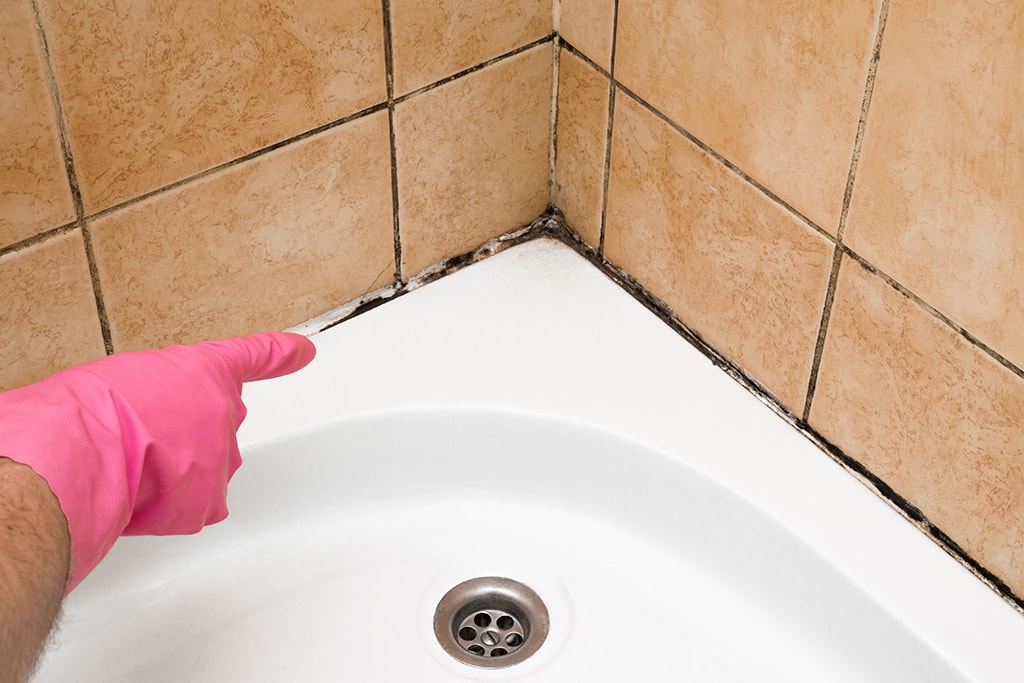
- Shower and tub caulk lines. The seams where the tub or shower base meets the wall are the most common location. Caulk is porous, stays wet after every use, and is rarely scrubbed during routine cleaning.
- Tile grout. Grout is porous and traps soap scum and organic material that mold feeds on. It is especially vulnerable in shower floors where water pools.
- Under the sink. Check supply lines and drain connections for slow drips. Even minor leaks create persistent moisture that leads to mold on cabinet floors and walls – often unnoticed until the damage is significant.
- Behind and around the toilet base. The seal between the toilet and the floor, and around the water supply line, can develop slow leaks. Kuna homes with older plumbing connections are worth checking annually.
- Bath mats and shower curtain liners. Both stay damp between uses and rarely dry fully. The bottom hem of a shower liner is especially prone to mold. Keep a small spray bottle of diluted bleach or white vinegar nearby and mist the liner after each shower. Hang bath mats to air dry after every use.
- Bath toys. Dark spots inside or around the holes in bath toys indicate mold growth. Replace affected toys rather than trying to clean them. When replacing, seal the holes with caulk to prevent water from entering and creating the same problem again.
- The bathroom vent fan cover. Dust accumulates on the fan cover and reduces airflow, which raises ambient humidity throughout the bathroom. A poorly functioning vent fan is one of the most common contributors to recurring mold in Kuna homes.
The Bleach Coil Method: Most Effective for Caulk and Grout Lines
This is the technique professional cleaning teams use for mold embedded in caulk seams and grout lines. It delivers sustained bleach contact directly into the affected area rather than a surface wipe that evaporates before it can penetrate.
What you need: Household bleach, water, cotton coils or paper towels, rubber gloves, a mask, a disposable container.
- Before applying any solution, sweep or vacuum the area to remove loose dust and debris. Applying bleach solution over dust spreads contaminants into the treatment area and reduces effectiveness.
- Mix 1 part bleach to 10 parts water for standard application. For heavily stained or deeply embedded mold in grout, increase to 1 part bleach to 3 parts water. Pour into your disposable container.
- Tear paper towels into strips and roll them into coils roughly matching the width of the caulk line or grout gap. Cotton coils from a beauty supply store hold more solution and conform better to tight seams.
- Soak the coils in the bleach solution until fully saturated.
- Press the coils firmly into the caulk seams and grout lines, pushing them into the gaps so they maintain contact with the affected surface.
- Leave in place for a minimum of one hour. For severe staining or deeply embedded mold, leave overnight.
- Remove the coils. The mold staining should be gone or substantially reduced. Rinse thoroughly with water.
- If staining remains, repeat once. For caulk that has turned completely black throughout its depth, re-caulking after mold removal is the better long-term fix.
Safety: Wear rubber gloves throughout. Run the bathroom fan and keep the door open while working. Never mix bleach with vinegar, ammonia, or any other cleaning product – these combinations produce toxic gases.
Vinegar: The Natural Option
Undiluted white vinegar kills most common mold species and is safe on most bathroom surfaces. Spray directly onto the affected area, let it sit for at least one hour, then scrub with a stiff brush and rinse. Vinegar is less effective than bleach on deeply embedded mold in porous grout but works well for surface mildew and as a regular preventive spray on shower liners and tile surfaces between deeper cleanings.
Baking soda adds light abrasion when you need to scrub – apply after the vinegar soak to work into grout lines with a brush. Rinse thoroughly when done.
Preventing Mold from Coming Back
Removal handles the current problem. Prevention determines whether you are dealing with it again in three months.
Ventilation is the single most important factor. Run the bathroom exhaust fan during every shower and for at least 30 minutes after. If your bathroom does not have a functioning vent fan, installing one is the highest-impact mold prevention investment available. Clean the fan cover regularly – a dust-clogged cover cuts airflow significantly and defeats the purpose.
Control humidity. Keep indoor bathroom humidity below 60 percent. In humid months, a small dehumidifier in the bathroom helps. Opening a window after showering when weather permits accelerates drying.
Keep surfaces dry between uses. A quick squeegee of shower walls after each use removes most of the standing water that feeds mold growth. Hang bath mats to dry rather than leaving them flat on the floor. Mist shower curtain liners with diluted vinegar or bleach solution after showering and let them hang open to dry.
Fix leaks immediately. Any slow leak under a sink or around a toilet is a mold event in progress. Address plumbing drips the day you find them, not when it becomes convenient.
Use mold-resistant products when remodeling. Mold-resistant grout, caulk, and bathroom paint are widely available and cost only marginally more than standard alternatives. For any bathroom renovation in a Kuna home, they are worth specifying.
Clean grout and caulk regularly. A monthly scrub with a stiff brush and a diluted bleach or vinegar solution prevents mold from establishing before it becomes visible. It is much easier to clean than to remove.
When to Call a Professional
Surface mold on caulk and tile is a DIY job. The following situations are not:
- Mold that covers more than roughly ten square feet
- Mold that has returned multiple times after repeated treatment
- Musty odor with no visible mold – indicates mold behind walls or under flooring
- Soft or discolored drywall, warped baseboards, or stained ceilings near the bathroom
- Any household member with respiratory conditions, allergies, or asthma experiencing worsened symptoms
Mold that has penetrated building materials requires professional remediation – not cleaning service. A remediation company assesses the scope, removes affected materials, and treats the underlying cause. Cleaning over structural mold is not a solution.
For bathroom mold that is surface-level but beyond what you want to handle, or for a thorough deep clean that addresses grout, caulk, and all the zones that routine cleaning misses, our deep cleaning services in Kuna and the surrounding Treasure Valley. We also offer a simply Kitchen, Bathroom, and Floors Only service that would be perfect for this. Request a free estimate and we will walk you through what the service covers for your bathroom.
Frequently Asked Questions
What is the most effective way to remove mold from shower caulk?
The bleach coil method – soaking paper towel strips or cotton coils in a 1:10 bleach solution, pressing them into the caulk seams, and leaving them in place overnight – is the most effective DIY technique. It delivers sustained bleach contact into the gap rather than a surface application that evaporates quickly. For caulk that is black throughout its depth, re-caulking after treatment is the better long-term fix.
What is the difference between mold and mildew in a bathroom?
Mildew is surface-level growth – flat, gray or white, and easy to wipe away with basic cleaning. Mold penetrates porous surfaces like caulk, grout, and drywall, and can grow behind walls. Mold that keeps returning after surface treatment, or a musty odor without visible growth, usually indicates mold below the surface that requires more than household cleaning.
Is vinegar as effective as bleach for bathroom mold?
Vinegar kills most common mold species and is a good option for surface mildew and regular preventive treatment. For deeply embedded mold in porous grout or caulk, bleach is more effective because it penetrates better. For sensitive surfaces or households that prefer to avoid bleach, vinegar plus a baking soda scrub is the better natural alternative.
How do I stop shower mold from coming back?
Ventilation is the highest-impact step – run the exhaust fan during and for 30 minutes after every shower. Keep surfaces as dry as possible between uses: squeegee shower walls, hang bath mats to dry, and mist shower liners with diluted vinegar after use. Fix any plumbing drips immediately. Monthly scrubbing of grout and caulk prevents mold from establishing before it becomes visible.
Can bathroom mold make you sick?
Yes. Mold exposure can cause allergic reactions (sneezing, runny nose, itchy eyes), respiratory symptoms (coughing, wheezing, shortness of breath), and skin irritation. Symptoms are typically worse for people with existing allergies, asthma, or weakened immune systems. Persistent or worsening symptoms in a household with visible bathroom mold are a reason to address the mold promptly and consult a doctor.
When should I hire a professional for bathroom mold?
Call a professional when mold covers a large area, keeps returning despite repeated treatment, is accompanied by a musty odor with no visible source, or when building materials show signs of water damage. Mold behind walls or under flooring requires professional remediation, not cleaning. For surface mold that you simply do not want to handle yourself, a professional deep cleaning service is appropriate.