Most households store cleaning products wherever they fit – under the kitchen sink, in a bathroom cabinet, on a laundry room shelf – without much system to it. The result is digging through bottles to find what you need, products stored near things they should not be near, and occasionally a child or pet getting into something they should not.
Good cleaning product storage solves three things at once: it keeps products away from people and pets who should not access them, it makes what you need easy to find when you are actually cleaning, and it protects the products themselves so they last. Here is how to set it up properly.
Safety Rules That Cannot Be Skipped
Before organizing for convenience, organize for safety. These rules apply in every household but are non-negotiable in homes with children or pets.
Keep all cleaning products out of reach or locked. Store everything in a cabinet with a childproof latch, on a high shelf children cannot climb to, or in a locked utility closet. The under-sink cabinet is the most common storage spot and the most common point of access for young children – if this is where your products live, it needs a working childproof latch on every door.
Never transfer products out of their original containers. Original containers have the product name, safety warnings, first aid instructions, and usage directions. Putting bleach in an unmarked spray bottle or decanting a floor cleaner into a food container removes all of that context and creates a serious hazard. Keep products in what they came in.
Store in a well-ventilated area. Many cleaning products emit fumes even when sealed. An enclosed cabinet in a room with no air movement concentrates those fumes over time. A utility room, garage shelf, or closet with some air circulation is better than a sealed cabinet under a sink in a windowless bathroom.
Never mix products together. Bleach and ammonia produce toxic chloramine gas. Bleach and vinegar produce chlorine gas. These combinations can happen accidentally when products are stored haphazardly and someone grabs the wrong bottle. Keeping categories separated – and knowing what should never be used in sequence – prevents this. See also: never store bleach-based products directly next to ammonia-based products on the same shelf.
Check and dispose of expired products. Cleaning products degrade over time. Bleach loses potency in 3-6 months after opening. Hydrogen peroxide breaks down quickly once opened. Expired disinfectants may no longer meet their stated kill claims. Check products during your periodic organization audits and dispose of anything past its useful life at a household hazardous waste facility – not poured down the drain or thrown in regular trash.
How to Organize What You Have
Categorize before you store. Group products by where they are used: bathroom cleaners together, kitchen cleaners together, floor products together, general disinfectants together. Within each category, sort by frequency of use – what you reach for every week goes at eye level or front of shelf; what you use monthly or seasonally goes higher or further back.
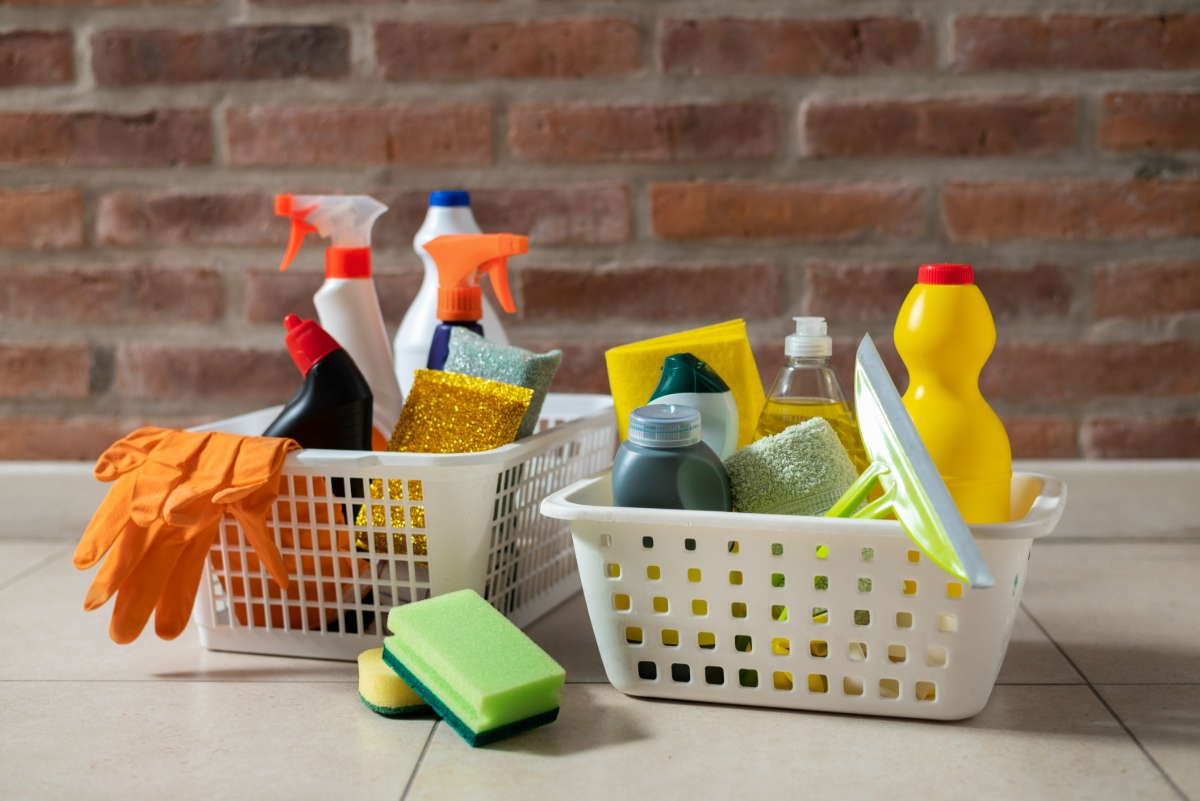
Use a portable caddy for the products you move room to room. An all-purpose cleaner, glass cleaner, disinfecting wipes, and a scrub brush used across the whole house belong in a single caddy you carry with you rather than distributed across three locations. This eliminates the time spent gathering supplies before you start cleaning and returning them when you are done.
Store bathroom-specific products in the bathroom. Toilet bowl cleaner, tub scrub, and mildew spray do not need to leave the bathroom. Keep a small supply of the products you use in each room in or near that room rather than centralizing everything. This saves trips and makes it more likely that surfaces get a quick clean when they need it rather than waiting for a dedicated cleaning session.
Use clear containers for small items. Sponges, scrub brushes, rubber gloves, and microfiber cloths stored in a drawer or bin are easier to manage in clear containers where you can see what is there without digging. Label the containers or use open bins so nothing gets buried.
Label everything you transfer to secondary containers. If you decant a bulk product into a smaller spray bottle for convenience – which is fine as long as it is the same product – label the secondary container with the product name, dilution ratio if applicable, and a safety note. Never leave a secondary container unlabeled even if you are certain you will remember what is in it.
Keep a cleaning station in the laundry room or utility closet if you have one. A central location with a dedicated shelf, hooks for tools, and a countertop or flat surface for prep work keeps the full cleaning kit in one accessible place. Commonly used items at eye level, bulky items on lower shelves, rarely used items higher up. This setup works especially well for households that clean on a schedule rather than reactively.
Maintaining the System
Organization systems decay without maintenance. A few habits keep cleaning product storage from sliding back into chaos:
Return products to their designated spots after every use. This sounds obvious but is the most commonly skipped step. Products left out become the new default storage location within a week.
Do a quick audit every few months – check for expired products, consolidate duplicates, and note what you are running low on. A fifteen-minute audit twice a year keeps the system current without requiring a full reorganization.
Involve everyone in the household in the system. If only one person knows where things go, the system works for one person. A simple label on each shelf or bin location is enough to make the system self-explanatory for everyone who uses it.
As your cleaning needs evolve – new products, new household members, a change in storage space – update the system rather than stacking new items wherever they fit. Small adjustments when things change prevent the gradual drift back to disorganized storage.
A well-organized cleaning supply setup takes an hour to establish and five minutes to maintain. If you find that keeping up with the cleaning itself is the harder challenge, our home cleaning handle the routine work so your supplies stay organized and your home stays clean. Request a free estimate to talk through what makes sense for your household.
Frequently Asked Questions
Where is the safest place to store cleaning products in a home with young children?
In a locked cabinet or on a high shelf that children cannot access, in every room where products are kept. The under-sink cabinet is convenient but requires a working childproof latch on every door – not just one if the cabinet has two doors. Any product that is toxic if ingested should be treated as securely as medication.
Can you store all cleaning products in the same cabinet?
Generally yes, with two caveats. Keep bleach-based products physically separated from ammonia-based products on different shelves – an accidental spill or leak that mixes them produces toxic gas. And ensure the storage area is ventilated; a completely sealed cabinet concentrates fumes over time even from closed bottles.
How long do cleaning products last before they expire?
It varies by product. Liquid bleach loses significant potency within 3-6 months of opening and should be replaced regularly. Hydrogen peroxide degrades quickly once opened and exposed to light. Multi-surface cleaners and dish soaps typically last 1-2 years unopened. Disinfectants that claim specific kill percentages may not meet those claims after expiration. Check products during your periodic storage audits and dispose of anything that has degraded.
What is the best way to organize cleaning supplies for a small home with limited storage?
A portable caddy with the products you use most frequently works well in any size home – it centralizes what you need, travels with you room to room, and tucks away compactly. For bathroom and kitchen-specific products, under-sink storage with small bins or a pull-out organizer uses the space efficiently. Minimize what you keep on hand by sticking to multi-purpose products rather than a specialized cleaner for every surface.
Is it safe to store cleaning products in the garage?
Yes, for most products, with some conditions. Extreme temperatures affect certain products – bleach degrades faster in heat, and some aerosols are not safe in temperatures above certain thresholds (check the label). Ensure the garage storage area is locked or otherwise inaccessible to children. Do not store cleaning products near fuel, paint, or other flammable materials.